

 Jun 01,2026
  By Visifly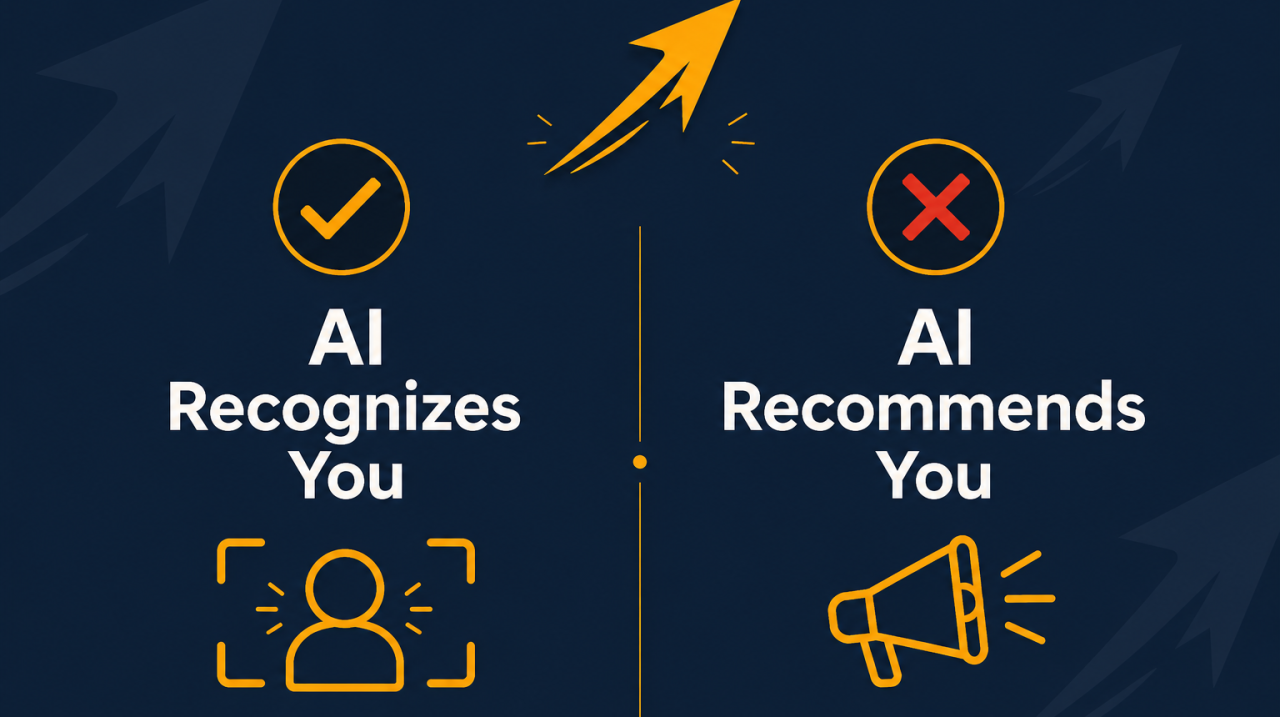
Table of Contents
This guide covers everything you need to know about AI SEO for small businesses in 2026, from how AI recommendation works to the exact gaps that keep small businesses invisible. If you are a small business owner trying to understand why AI search like ChatGPT and Perplexity never recommend you, this is the most direct answer available. AEO (Answer Engine Optimization) and AI SEO are no longer optional; they are the frontier where purchasing decisions are being made.
Quick Answer
AI SEO for small businesses is the practice of optimizing your digital presence so that AI searches, ChatGPT, Perplexity, Gemini, and Google AI Overviews, recognize and recommend your business when buyers ask purchasing questions. Traditional SEO gets you ranked in Google. AI SEO gets you recommended in AI. These are different thresholds, with different rules. We tested this on a real business with 10 years of experience, 20+ blog posts, and a verified Google Business Profile, and it was completely absent from AI recommendations. (Search Engine Land, 2025)
What Is AI SEO for Small Businesses?
AI SEO for small businesses is not a rebrand of traditional SEO. It is a fundamentally different discipline. Traditional SEO optimizes for ranking signals: backlinks, keyword density, page speed, Core Web Vitals. AEO, Answer Engine Optimization, targets recommendation signals: entity clarity, third-party citations, geographic anchoring, and rating thresholds.
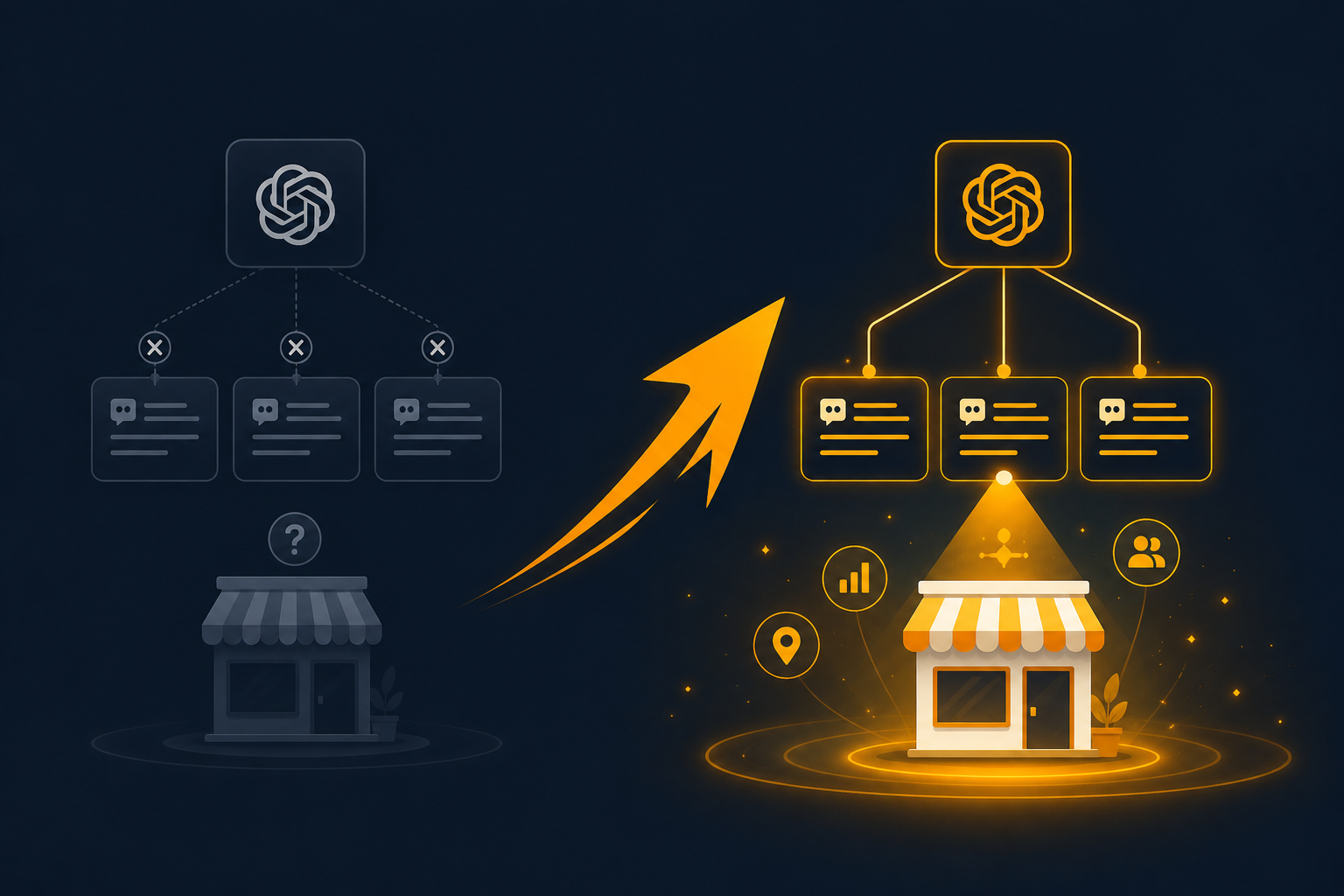
When a buyer types “best property management company in İstanbul” into Google, they get a list of 10 blue links and must choose. When they ask the same question to ChatGPT or Perplexity, they get 2–3 specific company names, presented as the answer. This is not a ranking. It is a recommendation. And if your business is not one of those names, you are invisible, not ranked lower, but completely absent.
For small businesses in competitive local markets, this distinction is existential. The buyer has already made a shortlist decision before visiting any website. AEO is the work of making sure your business is on that shortlist when AI Searches answer purchasing questions.
Why AI Recommendation Matters More Than SEO Ranking in 2026
The shift from search to AI recommendation is accelerating. According to Semrush’s 2025 AI Search Report, over 60% of B2C purchasing research now starts with an AI assistant for high-consideration service purchases. In local services, property management, accounting, legal, cleaning, consulting, AI recommendations are replacing the first page of Google as the primary discovery channel.
The implication for small businesses is stark. A decade of traditional SEO investment, blog content, on-page optimization, Google Business Profile management, does not automatically translate into AI visibility. These are parallel systems with overlapping but distinct requirements.
Understanding AI SEO for small businesses means understanding how AI Searches decide who to recommend. It is not about the most popular business. It is about the business with the clearest, most credible, most geographically anchored signal profile.
The Test: How We Measured AI Visibility for a Real Business
We wanted to understand AI SEO for small businesses empirically, not theoretically. So we ran a structured measurement test on a real company operating in Turkey’s local services market. The business has been operating for over 10 years with a strong traditional digital presence.
The Company We Tested
- A verified Google Business Profile with 15+ reviews
- 20+ published blog posts
- FAQPage schema on every post, validated in Google Search Console
- A Wikidata entity entry
- Active Instagram presence with consistent branding
- 49 indexed pages in Google Search Console
- 952 organic clicks in the last 3 months
By any traditional SEO standard, this is a legitimate, established business with real digital signals. We expected at least partial AI visibility. The results surprised us.
The Measurement Framework
We used a structured framework called the AI Recommendation Battery, a set of prompts designed to test three distinct AI behaviors: recognition, category accuracy, and recommendation. We ran two blocks across five AI systems: ChatGPT, Claude, Gemini, Perplexity, and Google AI Overviews.
Block A — Recognition: Does the AI know this company exists? Direct query (“What is [Company]?”), narrative query, and contextual query.
Block D — Recommendation: Does the AI recommend this company in competitive queries? Generic category, problem-based (“I have multiple properties to manage. Which company should I hire?”), and functional service queries.
Each response was scored: A-score 0–3 for recognition quality, D-score 0–2 per query for recommendation presence.
7 Reasons Your Small Business Is Not Being Recommended by AI
1. The Recognition–Recommendation Gap
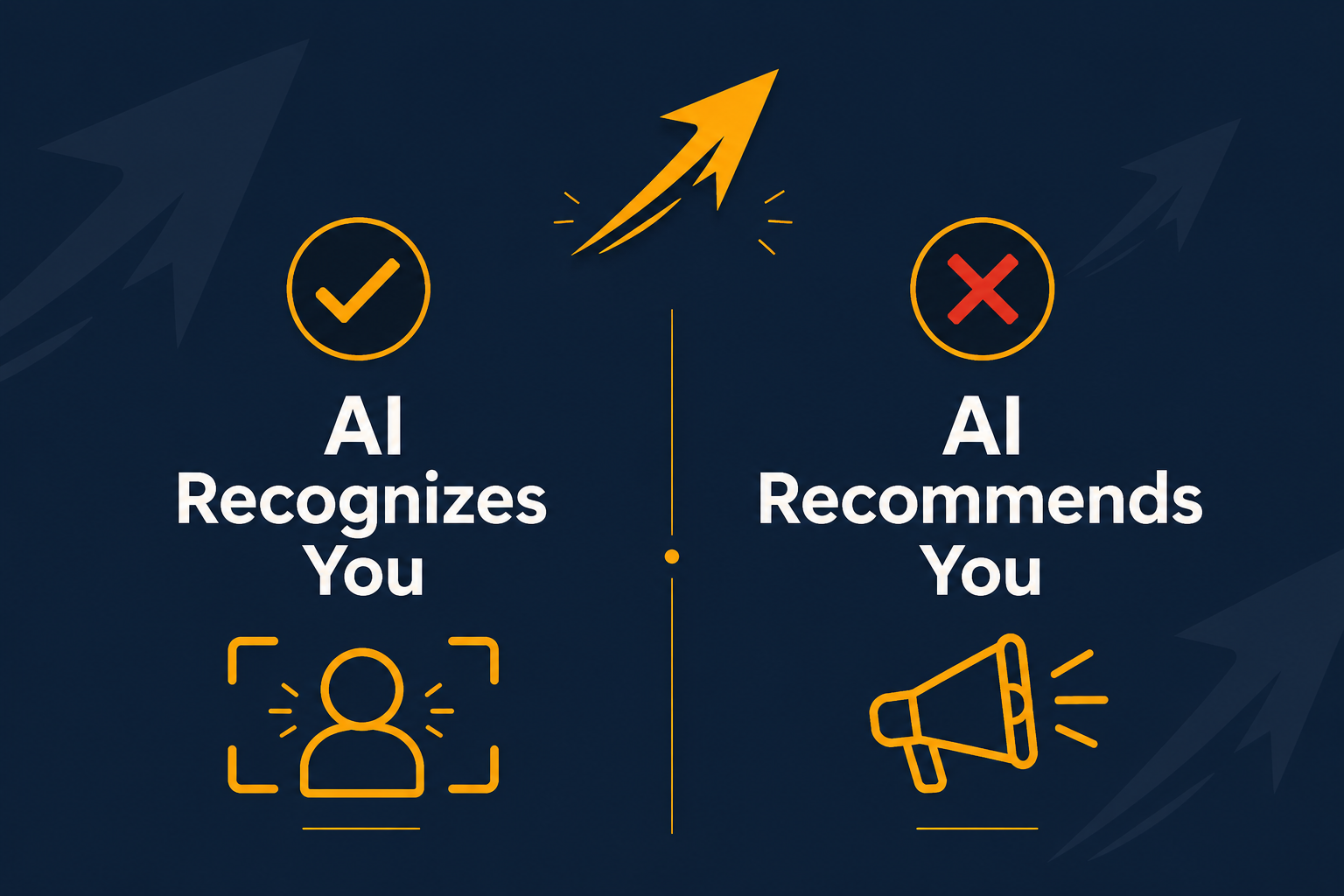
All five AI Searches gave the test company an A-score of 2. They knew the company, named its location, and described its services correctly. Then we ran Block D. All five systems returned a D-score of 0. Not a single recommendation across five systems and three competitive prompts.
This is the single most important finding in AI SEO for small businesses: being known by AI is not the same as being recommended by AI. There is a separate recommendation threshold, and most small businesses sit below it without knowing it.
2. Your Own Website Is Not an AI Citation Source
When AI Searches described the company in Block A, the sources cited were not the company’s blog or service pages. They were a Turkish complaint platform, Instagram, and a business directory. The company’s own content, 20+ SEO-optimized posts, was effectively invisible as a citation source.
High-traffic content on your own site does not automatically become AI citation material. Third-party sources that mention you carry more weight in AI retrieval than your own pages. This is the foundational truth of AEO for small businesses.
3. A 3.9-Star Rating May Be Below the AI Recommendation Threshold
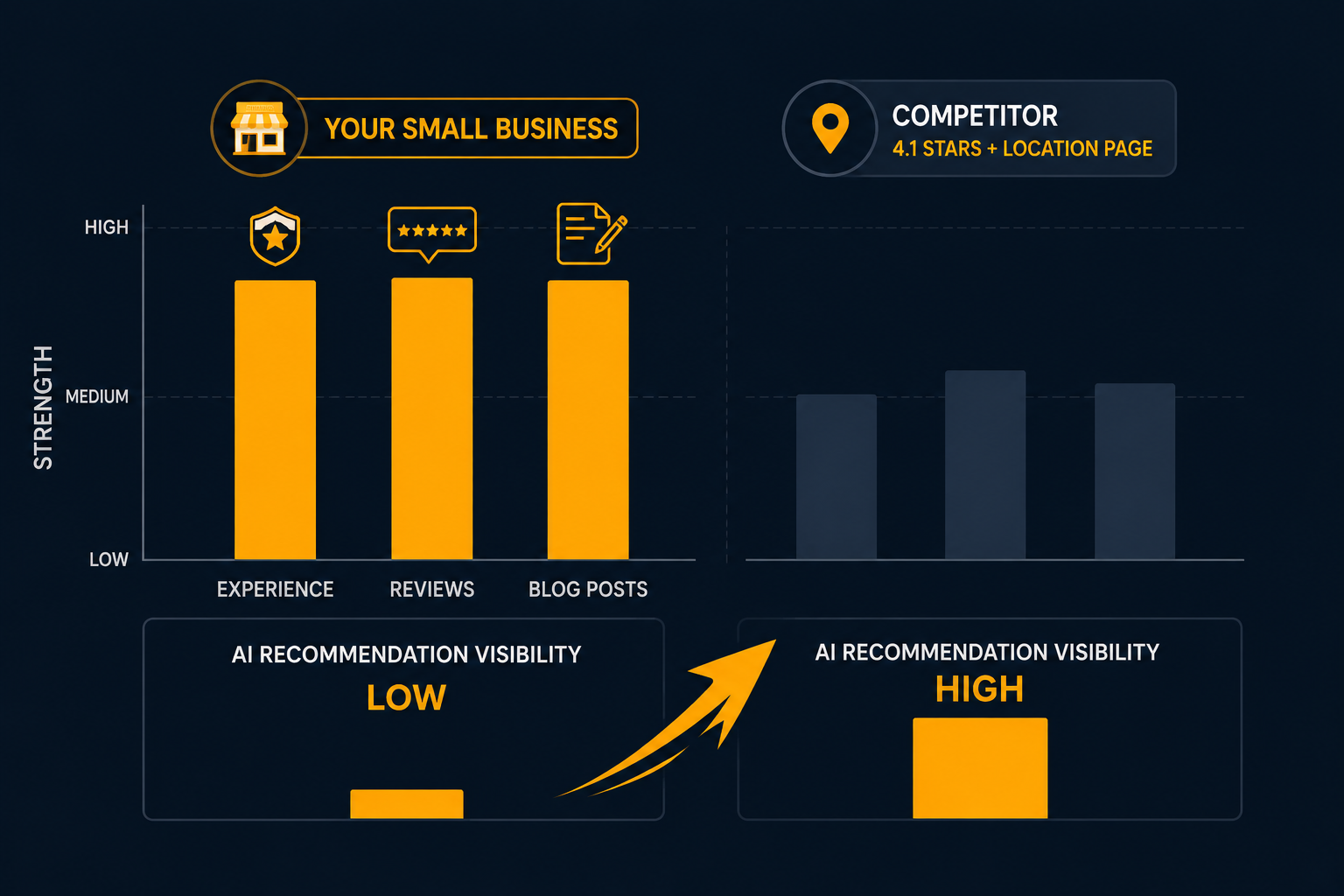
Every competitor that AI recommended had a Google Business Profile rating above 4.0. The test company had 3.9, just 0.1 points below what appears to be a critical threshold. One competitor was recommended despite having fewer total reviews. Rating quality was the deciding factor, not review count.
AEO means understanding that AI Searches evaluate your rating as a credibility signal, not just a customer satisfaction metric. A 0.1-point rating difference can determine whether you appear in AI recommendations or not, regardless of how long you have been in business.
4. Geographic Landing Pages Create Recommendation Authority
Competitors that AI recommended consistently had a dedicated landing page for the specific district they serve. One competitor was described by Perplexity as the “Old Town specialist”, positioning that came directly from district-anchored content.
AI Searches assign geographic authority based on explicit content signals. Without a page that positions your business in a specific location, you compete generically against every company in the broader category, and lose to businesses with geographic specificity.
5. Third-Party Citations Matter More Than First-Party Content
The sources AI Searches trust most are not your blog or service pages. They are: business directories with verified listings, industry roundup articles, local news coverage, review platforms, and social media profiles with consistent business information.
For AEO practitioners, a single mention in a reputable industry directory may do more for AI recommendation visibility than ten new blog posts. Off-site presence-building is consistently underweighted in traditional SEO strategies and critically underweighted when it comes to AI SEO for small businesses.
6. Entity Inconsistency Reduces AI Recommendation Confidence
AI Searches are more likely to recommend businesses they can describe with confidence. Entity clarity, consistent business name, address, phone, description, and category across all platforms, reduces AI uncertainty and increases recommendation probability.
The test company had a Wikidata entry, which is a strong entity signal. But its business description varied slightly across its Google Business Profile, website, and directory listings. These inconsistencies reduce AI confidence, which reduces recommendation frequency.
7. AI Systems Do Not Weight Experience or Tenure
The most psychologically difficult finding for established businesses: AI systems do not weight years of operation. A company with 10 years of experience competes on the same recommendation signals as a 2-year-old startup. According to Whitespark’s Local Search Ranking Factors 2025, the highest-weighted signals for local AI recommendation are review ratings, review recency, geographic content specificity, and third-party citation quality.
None of these signals directly correlate with business age. What matters is not how long you’ve been operating, it is how clearly, consistently, and credibly your digital presence signals what you do and where you do it.
How to Fix Your AI SEO: A 3-Step Action Plan for Small Businesses
Based on our test results, three AEO interventions will have the highest impact on AI recommendation visibility. None require a large budget. All require understanding how AI Searches evaluate recommendation credibility.
Step 1: Cross the 4.0 Rating Threshold
Run a targeted review campaign focused on quality over quantity. The goal is not 100 new reviews, it is moving from 3.9 to 4+. Identify your 20 most satisfied long-term clients and ask for specific, detailed reviews that mention your service category and location. This combination of rating quality and geographic content in reviews is a powerful AI recommendation signal.
Respond to all existing reviews, including negative ones. AI Searches parse review responses as additional content signals. A thoughtful response to a negative review demonstrates operational credibility, a signal AI systems interpret positively.
Step 2: Create a District-Level Landing Page
Build a dedicated page for your primary service district. The page should: explicitly position your business as the specialist for that area, include the district name in the title, H1, and URL slug, and contain service-specific content anchored to local context, local regulations, local client examples, local pricing context.
This creates the geographic authority signal that AI Searches use to assign “specialist” status in recommendation queries. This is the foundation of what we call the SIGNAL Framework, our structured methodology for building AI recommendation authority. At Visifly, we help businesses build exactly this kind of geo-anchored content architecture. See our pricing page for current service packages.
Step 3: Build Third-Party Citation Presence
Identify the 5–10 directories and platforms that AI Searches use as sources for your industry. Get listed, verify your listings, and ensure business information is consistent across all of them. Then pursue one or two mentions in industry roundup articles or local media, these carry outsized weight as AI citation sources.
Treat citation building as a quarterly AEO activity, not a one-time task. AI Searches update their knowledge bases regularly. Fresh citations from current-year sources carry more weight than older ones. A quarterly citation audit should be part of any serious AI SEO strategy for small businesses.
How Long Does AI SEO Take to Show Results?
Based on our longitudinal observatory data, businesses implementing the three interventions above typically see measurable improvement in AI recognition within 4–8 weeks, and improvement in AI recommendation within 8–16 weeks.
Google AI Overviews update fastest, often reflecting changes within 2–4 weeks. Perplexity and ChatGPT update more slowly, typically requiring 6–12 weeks to reflect new third-party citations. Testing across all five AI systems at regular intervals is the only reliable way to track AI SEO progress for small businesses.
AI SEO vs Traditional SEO: What Small Businesses Should Prioritize
AI SEO for small businesses does not replace traditional SEO, it extends it. The foundation of AI visibility is the same as traditional SEO: clear entity information, quality content, and a strong Google Business Profile. What AI SEO adds is a focus on the specific signals that trigger AI recommendation: rating thresholds, geographic content anchoring, and third-party citation quality.
For businesses with limited resources, the priority decision is straightforward. If your primary goal is Google organic rankings, invest in traditional SEO. If your primary goal is appearing in AI recommendations, the higher-value channel in 2026, invest in AEO: the three interventions above will move the needle fastest.
Who Needs AI SEO for Small Businesses Most?
AI SEO for small businesses is most urgent in three categories. First, local service providers, property managers, accountants, lawyers, cleaning companies, consultants, where high-consideration purchases are increasingly decided by AI recommendations before the buyer visits any website. Second, businesses in competitive urban markets where AI regularly names 2–3 specific companies in response to category queries. Third, any small business that has invested in traditional SEO but sees stagnant AI visibility.
If you are a small business owner in any of these categories, AI SEO for small businesses is not a future consideration, it is a present gap. The buyers who ask AI systems for recommendations are the same buyers who used to call the first result on Google page one. That channel has shifted. The businesses that understand AI SEO for small businesses now will own the recommendation space before competitors even realize the transition has happened.
Key Takeaways: AI SEO for Small Businesses in 2026
- AI SEO for small businesses is a separate discipline from traditional SEO, targeting recommendation signals rather than ranking signals.
- Recognition by AI does not equal recommendation by AI, the gap between these two is where most small businesses lose buyers.
- A Google Business Profile rating above 4.0 is a likely threshold for AI recommendation eligibility.
- Third-party citations carry more weight than first-party content in AI recommendation systems.
- Geographic landing pages for specific districts create “specialist” authority that drives AI recommendations.
- Results from AI SEO improvements typically appear within 4–16 weeks depending on the AI system.
Final Thoughts
A decade of experience, 20 blog posts, a Wikidata entry, and a verified Google Business Profile were not enough to cross the AI recommendation threshold. This is not a failure of the business, it is a mismatch between what traditionally signals credibility and what AI systems use to decide who to recommend.
AI SEO for small businesses is measurable, actionable, and closeable. But only if you test it first. If you want to know where your business stands in AI recommendations, not theoretically, but empirically, contact our team. We run structured AI visibility audits and will tell you exactly what your gaps are and how to close them.
What is AI SEO for small businesses?
AI SEO for small businesses is the practice of optimizing your digital presence so that AI systems like ChatGPT, Perplexity, Gemini, and Google AI Overviews recommend your business when buyers ask purchasing questions. Unlike traditional SEO which targets Google ranking signals, AI SEO targets recommendation signals: entity clarity, review ratings above 4.0, geographic content anchoring, and third-party citations from sources AI systems trust.
Why is my business not showing up in AI recommendations?
The most common reasons: a Google Business Profile rating below 4.0, no district-level landing page creating geographic authority, lack of third-party citations from sources AI systems trust, and inconsistent business information across platforms. Being recognized by AI (it knows you exist) is different from being recommended (it names you in competitive queries). Most small businesses pass the recognition threshold but fail the recommendation threshold.
Does traditional SEO help with AI recommendations?
Traditional SEO and AI SEO share a foundation, entity clarity, quality content, and a strong Google Business Profile, but AI recommendation requires additional signals. High organic rankings do not guarantee AI recommendation. A company with 20+ blog posts and strong organic traffic can be completely absent from AI recommendations because it lacks geographic content anchoring, 4.0+ ratings, and third-party citations.
How do I check if AI recommends my business?
Run structured tests across five AI systems, ChatGPT, Perplexity, Gemini, Claude, and Google AI Overviews, using two query types: recognition queries (direct questions about your company) and recommendation queries (competitive purchasing questions in your category and location). Score each response: does the AI know you exist, and does it name you when a buyer asks who to hire? The gap between these two scores is your AI visibility gap.
How long does AI SEO take to show results?
Businesses implementing targeted interventions, crossing the 4.0 review threshold, creating a district-level landing page, and building third-party citations, typically see improvement in AI recognition within 4–8 weeks and in AI recommendation within 8–16 weeks. Google AI Overviews update fastest (2–4 weeks). ChatGPT and Perplexity take longer (6–12 weeks). Regular structured testing across all AI systems is the only reliable way to track progress.


 Jun 16, 2026

