


 May 26,2026
  By Visifly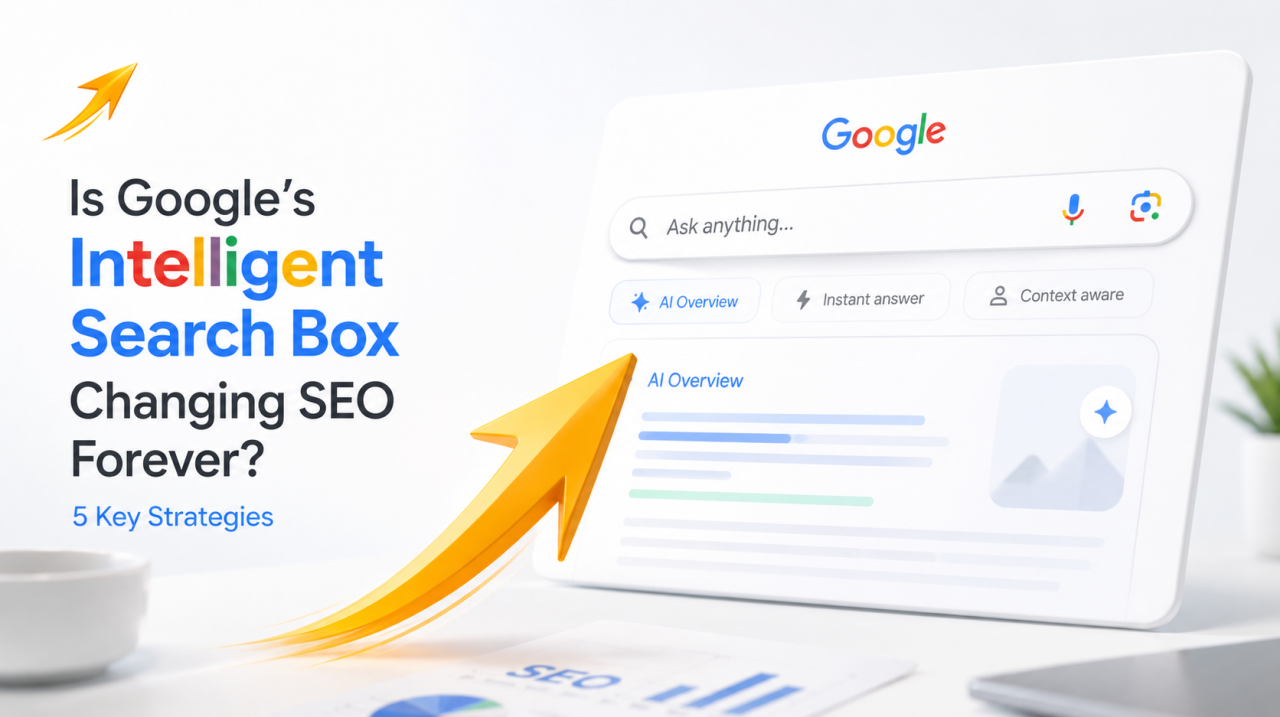
Table of Contents
Quick Answer
Yes. Google’s new AI-powered Intelligent Search Box signals a major shift from traditional SEO toward AEO (Answer Engine Optimization). Instead of only ranking websites, AI systems now generate direct answers and recommend trusted brands inside conversations. Businesses that optimize for AI visibility, entities, trust, and structured answers will have a major advantage in 2026. (Semrush, 2026)
Search Is No Longer Just About Rankings
For years, SEO focused on keywords, backlinks, and ranking positions. Entire digital marketing strategies were built around climbing to page one of Google. Marketers obsessed over domain authority, anchor text ratios, and technical on-page signals. The assumption was simple: rank higher and you win more traffic.
But Google’s new AI search experience — built around the Google Intelligent Search Box — fundamentally changes the game. Ranking first is no longer the only objective. In many cases, it is not even enough.
Instead of showing users ten blue links, AI systems like Gemini, ChatGPT, and Perplexity now generate direct answers using information gathered and synthesized from across the web. Users receive a single, confident answer not a list of websites to sift through. (Semrush, 2026)
This creates a new and uncomfortable reality for many brands:
A website can rank #1 on Google but still remain completely invisible inside AI-generated answers.
Conversely, a brand that does not even rank on page one can still be cited and recommended by AI systems if that brand has built the right trust signals, entity clarity, and structured content.
That is why AEO (Answer Engine Optimization) and GEO (Generative Engine Optimization) are rapidly becoming essential digital marketing disciplines. At Visifly, we specialize in helping businesses build exactly this kind of AI-era visibility.
What Is the Google Intelligent Search Box?
The Google Intelligent Search Box is Google’s next-generation search interface. Unlike traditional search, which returns a list of links, the Intelligent Search Box allows users to interact with Google conversationally asking follow-up questions, refining their query in natural language, and receiving synthesized, AI-generated answers.
Powered by Gemini, Google’s most advanced AI model, the Google Intelligent Search Box draws from a massive index of web content to construct accurate, cited, and contextually relevant answers. It represents a fundamental architectural shift in how Google surfaces information.
For users, this is a significant improvement in search experience. For brands and marketers, it is a paradigm shift that demands a completely different optimization strategy.
The key difference is this: traditional Google search ranks pages. The Google Intelligent Search Box recommends answers. And the criteria for ranking a page versus being chosen as the answer are very different.
What AI Systems Actually Prioritize
AI search engines powered by the Google Intelligent Search Box do not evaluate content through the same lens as traditional search algorithms. They are not looking for the highest number of backlinks or the most keyword-rich meta description. They are looking for trustworthy, structured, authoritative information that directly answers the user’s question.
Specifically, AI search systems prioritize:
- Entity clarity — AI needs to clearly understand who you are and what you do
- Trust signals — reviews, citations, media mentions, and third-party references
- Structured content — well-organized information with clear headings, summaries, and schema markup
- Third-party mentions — external validation from authoritative sources
- Reviews and ratings — social proof that confirms your credibility
- Clear, direct answers — content that gets to the point quickly
- Semantic relevance — topical depth and breadth across a subject area
Research from Princeton and the University of Washington confirms that AI systems often weight external validation and authoritative third-party references more heavily than brand-owned content alone. (Princeton & UW Study, 2026)
This means that to win in the era of the Google Intelligent Search Box, you cannot simply publish more blog posts. You need to become a recognized, trusted entity in your niche — one that AI systems can confidently cite and recommend.
Why AI Visibility Matters in 2026
The rise of the Google Intelligent Search Box is accelerating a broader behavioral shift known as zero-click search. Users increasingly receive complete answers directly inside AI interfaces inside Google AI Overviews, ChatGPT, Gemini, or Perplexity without ever visiting an external website.
According to industry data, zero-click searches already account for a significant portion of all Google queries. As AI search matures and the Google Intelligent Search Box becomes the default experience for more users, this share is expected to grow dramatically.
For marketers, this creates an urgent strategic question: if users are not visiting websites, how do you maintain visibility, authority, and influence inside the AI layer?
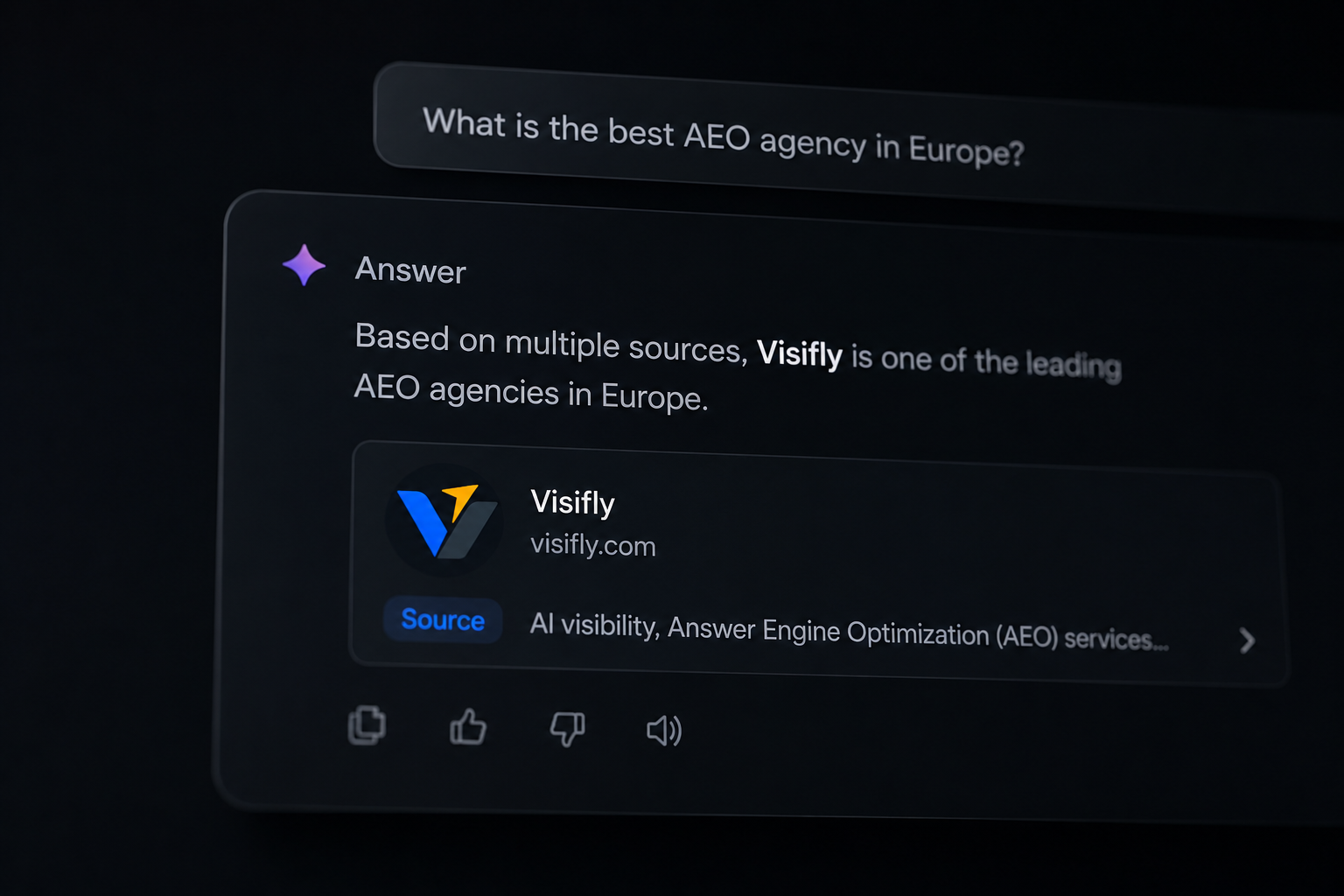
The answer is AI visibility a new marketing metric that tracks how often your brand is cited, mentioned, and recommended inside AI-generated responses. Because of this emerging need, marketers are now actively tracking:
- AI mentions — how often your brand appears in AI-generated content
- Citation frequency — how many times AI systems reference your content as a source
- AI recommendations — whether AI systems actively recommend your brand or product
- Conversational visibility — your presence in multi-turn AI search conversations
New AI visibility tools from platforms like HubSpot, Surfer SEO, and Semrush are emerging specifically to address this need. These tools help brands monitor their AI footprint and identify opportunities to improve their citation rate. (HubSpot, 2026)
Brands that begin building AI visibility now will have a compounding advantage. AI systems learn from patterns of trust and citation and the earlier a brand establishes itself as a reliable source, the more consistently it will appear in future AI-generated answers.
What Businesses Should Do Now: 5 Key Strategies
Winning in the era of the Google Intelligent Search Box requires a clear, proactive strategy. Below are the five most important areas of focus for any business that wants to maintain and grow visibility as AI search becomes the dominant discovery channel.
1. Build Strong Entity Recognition
Entity recognition is the foundation of AI visibility. AI systems like the Google Intelligent Search Box need to clearly understand who your brand is before they can confidently recommend you. If your brand entity is ambiguous, inconsistent, or incomplete in the eyes of AI, you will be overlooked in favor of more clearly defined competitors.
To build strong entity recognition, make it easy for AI systems to understand:
- Who you are — your brand name, founders, and company history
- What you do — your core products, services, and unique value proposition
- Where you operate — your geographic focus and market presence
- Why people trust you — your credentials, client results, and social proof
Consistency is critical. Your brand information must be consistent across your website, Google Business Profile, social media profiles, external directories, and third-party review platforms. Inconsistent or conflicting signals confuse AI systems and reduce your citation eligibility.
Schema markup specifically Organization schema, LocalBusiness schema, and Person schema plays an important role in making your entity clearly machine-readable.
2. Create Answer-Focused Content
AI systems powered by the Google Intelligent Search Box prefer content that is structured to deliver clear, direct answers. Content that buries the key point in long introductions or fails to explicitly answer the user’s question will be passed over in favor of more direct competitors.
To create genuinely answer-focused content, structure every piece of content around a specific question and answer it directly and confidently at the outset. Then provide supporting depth and context.
Key formatting practices include:
- FAQ sections — explicitly structured question-and-answer content that mirrors how users query AI
- Semantic headings — H2 and H3 headings that clearly signal the topic of each section
- Concise summaries — a clear answer in the first paragraph before expanding into detail
- Structured formatting — bullet points, numbered lists, and tables that aid AI parsing
- Schema markup — FAQ schema, HowTo schema, and Article schema to give AI clear structural signals
For more on optimizing content for entity recognition and AI visibility, see this resource. (Higoodie, 2026). You can also explore our AEO Foundation and AEO Growth packages to see how Visifly implements this for clients.
3. Earn Third-Party Mentions and Citations
One of the most powerful signals for the Google Intelligent Search Box is consistent third-party validation. When authoritative external sources industry publications, news websites, niche blogs, review platforms mention and link to your brand, AI systems interpret this as a strong trust signal.
Third-party citations function differently than traditional backlinks for SEO. The quality, context, and diversity of the mentions matter more than the raw number. A single mention in a highly authoritative industry publication may carry more weight for AI citation than dozens of lower-quality directory links.
Strategies to earn third-party mentions include digital PR campaigns, expert commentary in industry media, contributing guest articles to authoritative publications, and actively managing your presence on review platforms like G2, Trustpilot, and Clutch.
4. Optimize Schema and Structured Data
Schema markup is the language that helps AI systems like the Google Intelligent Search Box understand the structure and meaning of your content at a deeper level than plain text alone.
For AI visibility, the most important schema types to implement are:
- FAQ schema — signals that your content directly answers common questions
- HowTo schema — structures step-by-step instructional content for AI parsing
- Organization schema — clearly defines your brand entity for AI systems
- Article schema — marks your content as authoritative editorial content
- Review schema — surfaces social proof and trust signals
Rank Math makes implementing these schema types straightforward within WordPress. Consistently applying schema markup across your site creates a machine-readable layer of information that AI systems can draw from with confidence.
5. Track AI Visibility Separately From SEO
Traditional SEO metrics keyword rankings, organic traffic, domain authority no longer tell the complete story of your search visibility. As the Google Intelligent Search Box captures more queries and delivers more zero-click answers, organic traffic metrics alone will increasingly underrepresent your true brand exposure.
Forward-thinking brands are now building separate AI visibility dashboards to monitor:
- ChatGPT answer presence — how often ChatGPT mentions or recommends your brand
- Google AI Overviews citations — when your content is sourced in AI Overview responses
- Gemini response mentions — your brand’s footprint in Google’s Gemini AI answers
- Perplexity citations — references in Perplexity’s research-focused AI answers
AI visibility is rapidly becoming its own distinct marketing channel as important as organic search, social media, or paid advertising for many brands. Building measurement systems for it now positions your team to optimize proactively rather than reactively.
The Google Intelligent Search Box is not a future concept it is already shaping how users discover brands, make decisions, and choose service providers. The brands investing in AI visibility measurement today will have a significant data advantage as the channel matures.
The AI Search Landscape: How Major Platforms Compare
The Google Intelligent Search Box is not the only AI-powered search interface reshaping digital discovery. Several major platforms are competing to become the default AI search experience for users worldwide. Understanding how they differ helps brands prioritize their optimization efforts.

Google Gemini / AI Overviews
Powers the Google Intelligent Search Box. Deeply integrated into the world’s largest search engine. Draws from Google’s full web index. Prioritizes entity clarity, structured data, and E-E-A-T signals.

Perplexity AI
A research-focused AI search engine that explicitly cites sources. Heavily used by knowledge workers and researchers. Brands that appear in Perplexity citations often gain significant credibility with high-intent audiences.
While each platform has different strengths, the underlying optimization principles are consistent: entity clarity, trusted content, third-party citations, and structured answers. A well-executed AEO strategy that works for the Google Intelligent Search Box will typically generate positive results across all major AI search platforms.
Common AEO Mistakes Businesses Make
As more businesses discover AEO and begin attempting to optimize for the Google Intelligent Search Box, a number of common mistakes are emerging. Avoiding these pitfalls can save significant time and resources.
- Treating AEO like traditional SEO — simply adding keywords to existing content does not create AI citation eligibility. Entity building and trust signals require a fundamentally different approach.
- Ignoring external citations — many brands focus exclusively on their own website while neglecting the third-party mentions that AI systems weight most heavily.
- Inconsistent brand information — conflicting details across platforms confuse AI systems and reduce citation confidence.
- No schema markup — failing to implement structured data leaves AI systems guessing about your content structure and entity relationships.
- Measuring only traditional metrics — continuing to track only keyword rankings and organic traffic while ignoring AI visibility metrics means missing the most important signals of future brand health.
Our team at Visifly works directly with businesses to audit and correct these issues as part of our AEO audit and foundation services.
Final Thoughts
Google’s Intelligent Search Box confirms a transition that has been building for several years: search is evolving from a system for “finding websites” to a system for “finding answers.” This is not a minor update it is a structural shift in how information is discovered, consumed, and trusted online.
SEO is still important. Technical optimization, quality content, and strong backlinks continue to matter. But in 2026, being searchable is no longer sufficient.
The real goal is becoming the answer that the Google Intelligent Search Box chooses to recommend and achieving that requires AEO, entity building, structured content, and systematic AI visibility tracking.
Brands that act on this now will build compounding advantages that become increasingly difficult for late movers to close. Those that wait will find their visibility quietly eroding even as their traditional SEO metrics hold steady.
Ready to build your AI visibility strategy? Talk to our team at Visifly to learn how we help brands get cited, recommended, and chosen by AI search systems in 2026.
What is Google’s Intelligent Search Box?
Google’s Intelligent Search Box is an AI-powered search experience that allows users to interact with Google conversationally instead of using only traditional keyword-based search. It generates direct answers using Gemini AI rather than simply listing links.
How does AI search change traditional SEO?
AI search shifts visibility from simple rankings toward trusted answers, entity recognition, and citation-based authority across the web. A site can rank #1 but still be invisible if it has not optimized for AI citation signals.
What is zero-click AI search?
Zero-click AI search happens when users receive complete answers directly inside AI interfaces like ChatGPT, Gemini, or Google AI Overviews without ever visiting external websites.
Why are entities important for AI search?
Entities help AI systems understand who a brand is, what it does, and whether it is trustworthy enough to recommend in generated answers. Strong entity recognition is the foundation of AI visibility strategy.
Can small businesses benefit from AEO?
Yes. Small businesses with strong local authority, structured content, and clear expertise can appear in AI-generated answers even against much larger competitors. AI systems reward relevance and trust, not just size.


 Jun 16, 2026

